


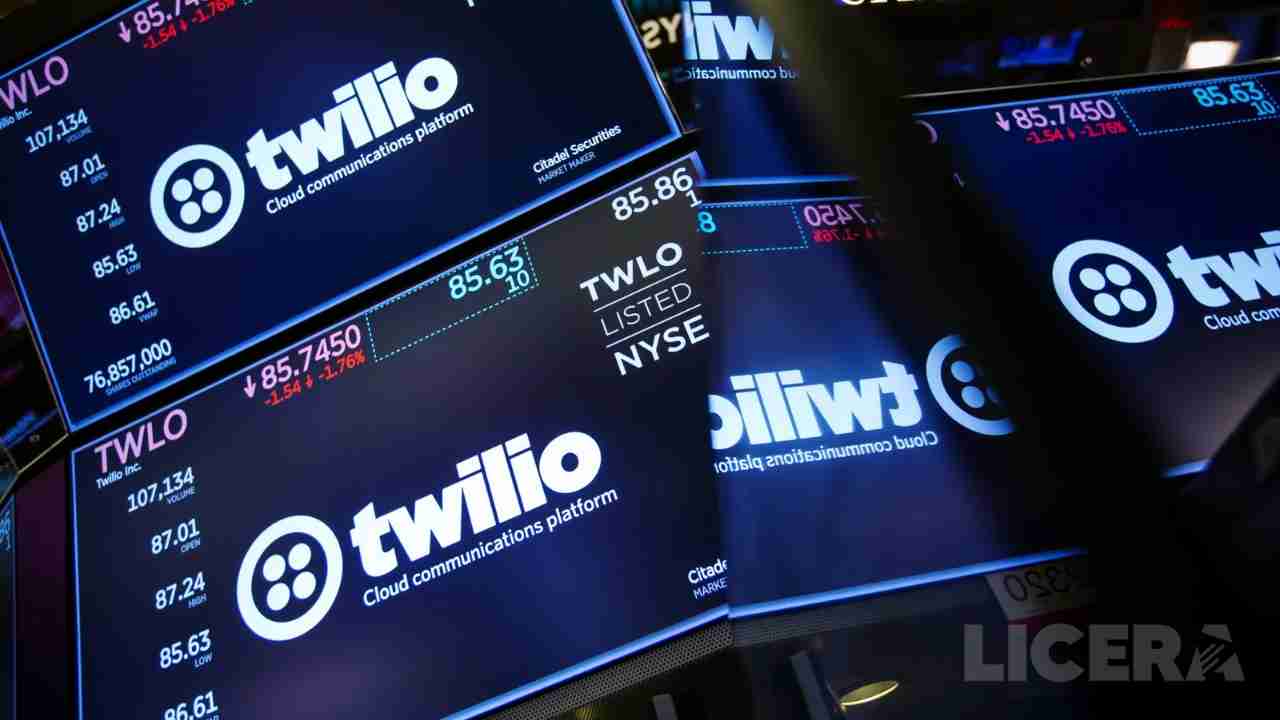
Twilio’s recent stock movement reflects renewed optimism across AI-linked technology firms. The company’s upcoming inclusion in the S&P MidCap 400 index, coupled with positive business developments like RCS messaging expansion, has fueled investor enthusiasm.
Despite a slight 6% decline in its latest trading session, Twilio’s 1-year total shareholder return stands at 52%, signaling long-term confidence. Yet, with analysts divided on valuation metrics, investors are asking a key question: Is Twilio undervalued or already priced for perfection?
The Bullish Momentum: AI and Market Confidence
The tech sector’s rebound, largely driven by artificial intelligence momentum, has benefited companies like Twilio that blend software infrastructure with AI capabilities. Investor optimism around Twilio’s ability to scale its communications API platform and integrate machine learning into customer engagement tools has contributed to its positive sentiment.
However, valuation remains a sticking point. Twilio’s growth trajectory and its shift toward profitability have improved fundamentals, but the market’s pricing may already reflect those expectations.

The Consensus: Overvalued by 58%
According to the most popular valuation narrative, Twilio’s current share price of $107.12 significantly exceeds its fair value estimate of $68, implying an overvaluation of roughly 58%.
This bearish stance centers on:
- Uncertain profitability consistency
- Competitive pressures within the AI-communications sector
- A moderate moat vulnerable to rapid tech disruption
- Lack of a strong margin of safety, deterring value investors
Even with recent operational improvements, this valuation model suggests the market has already priced in Twilio’s near-term growth potential.
Fair Value (Bearish Model): $68 → Overvalued
The Contrarian View: DCF Suggests Undervaluation
A competing valuation model tells a different story. The Discounted Cash Flow (DCF) analysis values Twilio at $132.33, about 19% above the current price, indicating potential undervaluation.
This scenario assumes stronger cash flow growth, margin expansion, and improved efficiency across Twilio’s core communications platform and AI-powered products.
Fair Value (DCF Model): $132 → Undervalued
The stark contrast between models underscores how sensitive Twilio’s valuation is to profitability assumptions and competitive moat strength.

Buffett’s Take: Not a Value Stock (Yet)
If legendary investor Warren Buffett were to assess Twilio, it likely wouldn’t fit his value criteria today:
- Inconsistent profitability and limited earnings predictability
- Moderate competitive moat in a fast-evolving tech niche
- High valuation multiples relative to intrinsic value
- Industry volatility unsuitable for conservative, long-term holding
Still, with improving management and a focus on durable earnings, Twilio could gradually evolve into a more attractive candidate for value-based investors.
What Could Shift the Narrative
For Twilio to break free from its “overvalued” label, investors would need to see:
✅ Sustained profitability and cash flow growth
✅ Clear AI-driven competitive differentiation
✅ Strengthened customer retention metrics
✅ Expansion into enterprise-grade messaging and automation
Should these materialize, the market’s skepticism could pivot, validating the bullish DCF outlook.
Summary
Twilio’s story sits at the intersection of AI enthusiasm and valuation realism. Its inclusion in the S&P MidCap 400 signals market confidence, yet divergent valuation models highlight ongoing uncertainty.
For investors, the next phase depends on whether Twilio can sustain earnings growth while reinforcing its competitive moat. If management delivers, the company may transition from speculative tech play to dependable AI infrastructure leader.


