


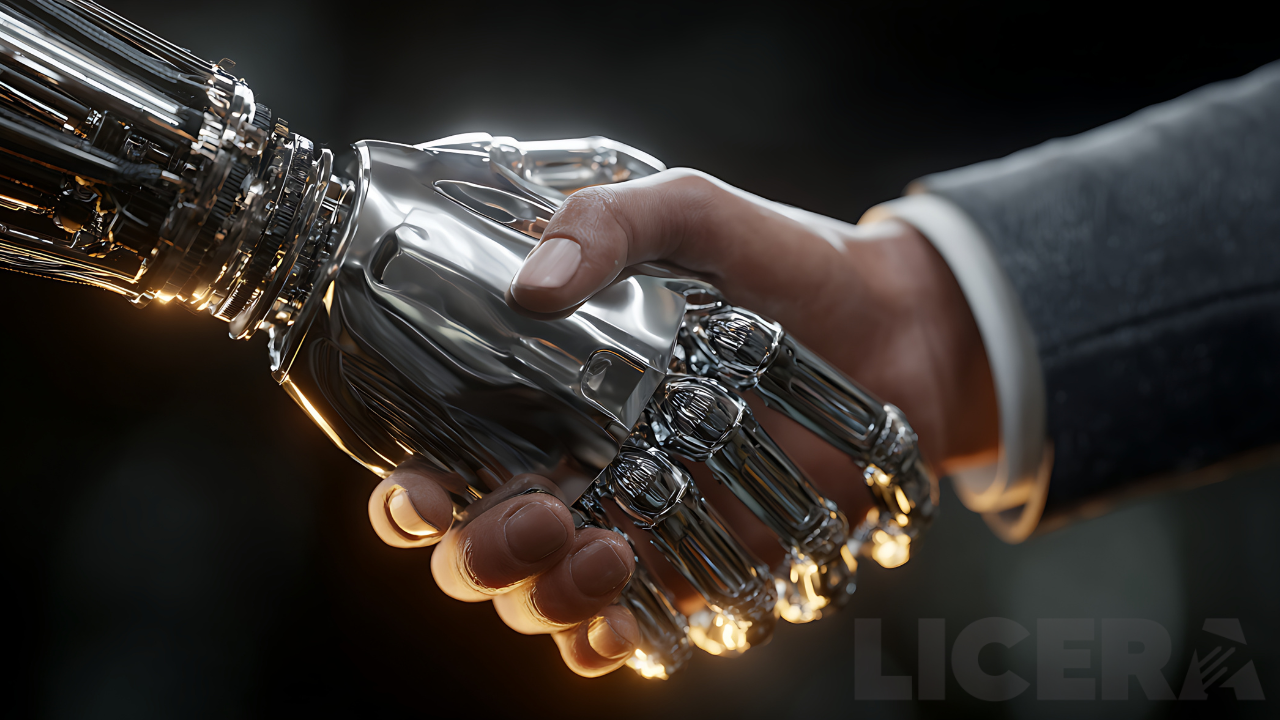
Marketing automation changed the game.
Tools like HubSpot, Mailchimp, and Marketo gave marketers the power to automate repetitive tasks, create segmented campaigns, and measure results efficiently.
But that was just the beginning.
Now, we’re witnessing a paradigm shift from automated to autonomous — powered by artificial intelligence that doesn’t just follow rules, but learns, adapts, and makes decisions in real time.

What’s the Difference? Automation vs. Autonomy
Feature: Marketing Automation vs Autonomous AI Marketing
- Logic
- Marketing Automation: Rule-based
- Autonomous AI: Machine-learning driven
- Execution
- Marketing Automation: Pre-set workflows
- Autonomous AI: Dynamic, self-optimizing
- Data Use
- Marketing Automation: Historical data
- Autonomous AI: Real-time + predictive modeling
- Human Input
- Marketing Automation: Frequent
- Autonomous AI: Minimal
- Speed of Adaptation
- Marketing Automation: Slow
- Autonomous AI: Instantaneous
Traditional automation systems follow instructions. Autonomous AI learns what works, discards what doesn’t, and continually improves — without human intervention.

The Rise of Autonomous AI in Marketing
Autonomous AI marketing leverages a combination of:
- Machine Learning (ML)
- Natural Language Processing (NLP)
- Predictive Analytics
- Generative AI (GenAI)
- Reinforcement Learning
Together, these enable marketing systems to independently decide:
- Which segment to target
- What creative to use
- When to send a message
- How to allocate budgets
- Where to place ads
- How to improve conversion rates in real time
Think: AI-powered marketers that never sleep, analyze faster than any team, and optimize continuously.

Real-World Use Cases of Autonomous AI Marketing
1. Dynamic Ad Optimization
Autonomous engines like Google Performance Max or Meta’s Advantage+ campaigns adjust ad creatives, audiences, placements, and bidding strategies automatically — sometimes hundreds of times per day — to drive ROI.
2. AI-Powered Email Campaigns
Tools like Seventh Sense use behavioral AI to personalize email send times for each user, increasing open rates and engagement without manual setup.
3. Conversational AI Assistants
Platforms such as Drift or Intercom deploy AI bots that guide B2B buyers, schedule meetings, and qualify leads without sales reps lifting a finger.
4. Predictive Content Generation
Autonomous AI tools like Persado or Phrasee use NLP and deep learning to craft marketing messages that predict what language will perform best for a specific audience.

Benefits of Going Autonomous
Faster Decision-Making
AI can analyze millions of signals in seconds—far beyond human capability.
Continuous Optimization
Autonomous systems test and improve 24/7, even while your team sleeps.
Improved ROI
Budgets shift automatically to high-performing channels, reducing waste.
Hyper-Personalization at Scale
Every customer journey becomes uniquely optimized in real time.
Reduced Operational Load
Marketing teams can focus on strategy and creativity while AI handles execution.

Risks & Challenges
Loss of Human Control
Marketers must trust the AI’s decisions and set up proper governance to avoid brand missteps.
Black Box Problem
It’s not always clear why the AI made a certain decision. Transparency remains a concern.
Data Privacy & Ethics
Autonomous systems must comply with GDPR, CCPA, and evolving data laws.

Preparing Your Team for Autonomous AI Marketing
- Audit your current Martech stack — What’s automatable vs. what could be autonomous?
- Invest in data infrastructure — AI is only as good as the data it learns from.
- Upskill your team — Marketers don’t need to become data scientists, but they must understand how AI works.
- Start small, scale fast — Pilot use cases like AI email send times, AI A/B testing, or predictive lead scoring.
- Appoint an AI marketing lead — Someone who bridges marketing, tech, data, and compliance.

Conclusion: The Future Is Here, and It’s Learning Fast
The evolution from automation to autonomy is more than just a technological upgrade—it’s a redefinition of the marketer’s role.
Those who embrace autonomous AI will gain a competitive edge through unmatched efficiency, precision, and personalization.
Those who don’t? They’ll be left behind, doing manual tasks in a world of self-optimizing engines.
Marketing isn’t being replaced by AI. It’s being reimagined by those who know how to use it.


