


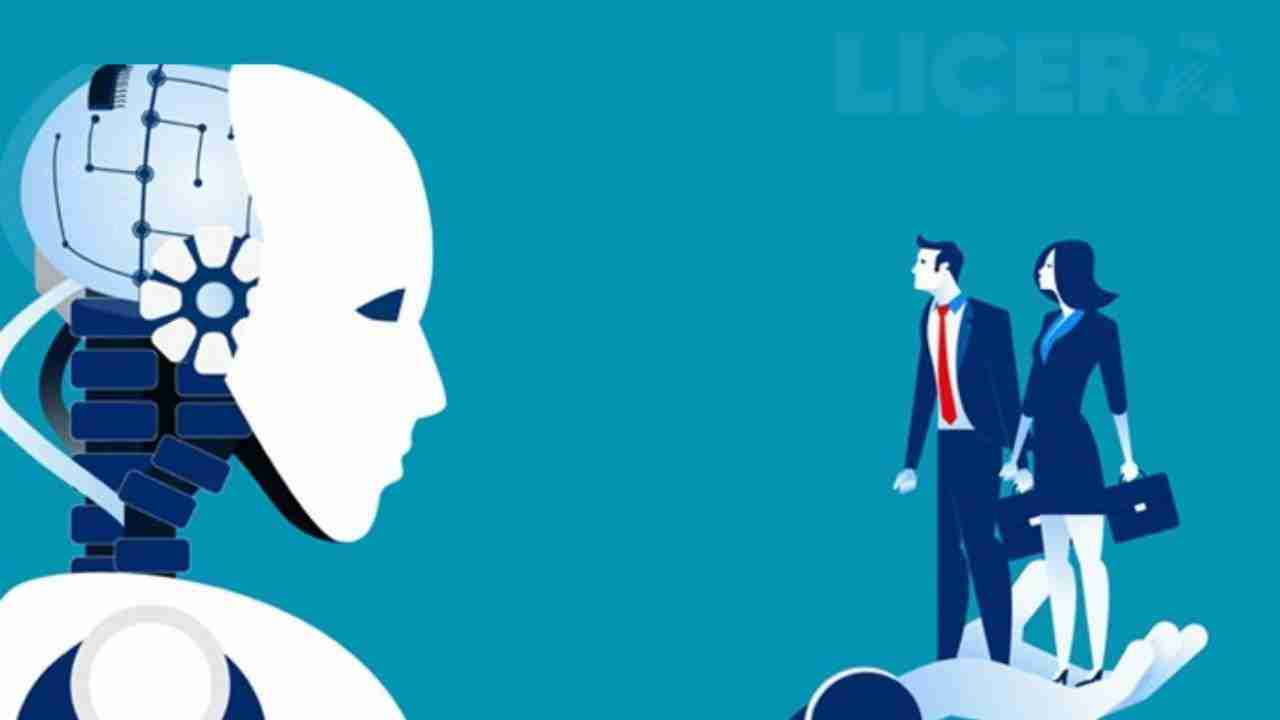
Artificial Intelligence (AI) is revolutionizing the HR and recruitment landscape, providing innovative solutions to enhance efficiency, accuracy, and candidate experience.
This article explores how AI is transforming HR and recruitment, the benefits and challenges of adopting AI, and practical steps for integrating AI into your HR processes.
HR and Recruitment

What is AI for HR and Recruitment?
AI for HR and Recruitment refers to the use of artificial intelligence technologies to streamline and optimize HR functions, including talent acquisition, employee engagement, performance management, and administrative tasks. These technologies leverage machine learning, natural language processing, and data analytics to enhance decision-making and improve operational efficiency.
By automating repetitive tasks such as resume screening and scheduling interviews, AI allows HR professionals to focus on strategic activities that add more value to the organization.
HR and Recruitment Industry
The HR and recruitment industry is rapidly evolving with the integration of AI. According to PwC’s Global Artificial Intelligence Study, AI could contribute up to $15.7 trillion to the global economy by 2030. In HR, AI is being used to automate repetitive tasks, analyze large volumes of data, and provide actionable insights, thereby transforming how organizations manage their workforce.
AI-powered tools can enhance the recruitment process by using algorithms to match candidates with job openings more accurately, reducing time-to-hire and improving the quality of hires. These tools can analyze candidates’ skills, experiences, and even social media activity to predict their suitability for a role. Furthermore, AI chatbots can handle initial candidate interactions, providing information and answering questions, thus improving the candidate experience.
In terms of employee engagement and performance management, AI can analyze employee data to identify trends and patterns that might indicate disengagement or potential performance issues. This allows HR teams to proactively address these issues before they escalate. For instance, AI-driven sentiment analysis can gauge employee satisfaction from surveys or internal communications, helping HR to implement timely and effective interventions.
Administrative tasks, such as payroll processing, benefits administration, and compliance reporting, can also be significantly improved with AI. By automating these processes, organizations can reduce errors, save time, and ensure compliance with regulatory requirements. AI can also assist in creating personalized development plans for employees by analyzing their career paths and suggesting relevant training programs.
AI is revolutionizing the HR and recruitment industry by making processes more efficient, data-driven, and candidate-friendly. By adopting AI technologies, organizations can enhance their talent acquisition strategies, improve employee engagement, and streamline administrative functions.
5 Benefits of AI in HR and Recruitment

By integrating AI, companies can enhance their talent acquisition strategies, improve candidate experiences, and streamline administrative tasks. This section explores five key benefits of using AI in HR and recruitment, underscoring its significant impact on business operations.
1. Enhanced Candidate Sourcing
AI tools can analyze vast amounts of data to identify the best candidates for a position, reducing time-to-hire and improving the quality of hires. For instance, AI algorithms can scan resumes, social media profiles, and professional networks to find potential candidates that match job requirements.
By leveraging AI for candidate sourcing, companies can streamline the recruitment process and ensure they are attracting top talent. According to the Society for Human Resource Management (SHRM), AI-driven sourcing tools are highly effective in identifying candidates who might not be actively looking for new opportunities but fit the job profile perfectly.
2. Improved Candidate Experience
AI-powered chatbots can engage with candidates throughout the recruitment process, answering their queries and providing updates. This continuous interaction enhances the candidate experience and ensures that applicants remain engaged and informed.
By automating communication, AI helps maintain a positive and professional relationship with candidates, which can significantly improve their perception of the company. Harvard Business Review highlights that AI-driven chatbots and virtual assistants are becoming essential tools in HR for maintaining high levels of candidate engagement.
3. Bias Reduction in Hiring
AI can help reduce unconscious bias in hiring by focusing on candidate qualifications and experience rather than demographic factors. By standardizing the evaluation process, AI ensures fairer hiring practices.
This leads to a more diverse and inclusive workforce, which can enhance creativity and innovation within the organization. Forbes reports that companies using AI for recruitment are finding it easier to implement unbiased hiring practices and promote diversity in their teams.
4. Data-Driven Decision Making
AI provides HR professionals with valuable insights by analyzing employee data. This enables more informed decision-making regarding talent management, employee engagement, and retention strategies.
AI can track and predict employee performance, identify potential issues, and suggest interventions to improve workplace satisfaction and productivity. McKinsey emphasizes the importance of AI in providing actionable insights that help HR departments make strategic decisions based on data rather than intuition.
5. Efficiency in Administrative Tasks
AI automates routine administrative tasks such as scheduling interviews, managing payroll, and processing leave requests. This allows HR teams to focus on more strategic activities that add value to the organization.
By reducing the burden of administrative work, AI helps HR professionals allocate more time to critical functions like employee development and strategic planning. Deloitte highlights that AI-driven automation in HR not only improves efficiency but also enhances accuracy and compliance in administrative processes.
The integration of AI in HR and recruitment offers transformative benefits that can significantly enhance how organizations manage their workforce. From improving candidate sourcing and reducing bias in hiring to providing data-driven insights and automating administrative tasks, AI empowers HR professionals to focus on strategic initiatives that drive organizational success.
8 Challenges if You Are Not Using AI in HR and Recruitment

The HR and recruitment landscape is continuously evolving, and leveraging AI is becoming increasingly critical for efficiency, accuracy, and strategic insights. However, many organizations still rely on traditional HR methods, facing numerous challenges that impact their effectiveness and competitiveness. This part outlines eight significant challenges in HR and recruitment, supported by statistics and research, highlighting the negative impact on business operations.
1. Inefficient Recruitment Processes
Without AI, HR teams may struggle with manual resume screening and interview scheduling, leading to longer hiring times and increased workloads. This inefficiency not only delays the hiring process but also places a heavy burden on HR staff. According to the Society for Human Resource Management (SHRM), companies can significantly reduce time-to-hire by automating these repetitive tasks, thus improving overall productivity.
2. Higher Risk of Bias
Traditional hiring processes are prone to unconscious bias, which can lead to discriminatory hiring practices. This bias can result in a less diverse workforce, which may stifle creativity and innovation. AI helps mitigate this risk by providing objective candidate evaluations based on skills and experience rather than demographic factors. Forbes highlights that AI-driven hiring practices can promote diversity and inclusivity, leading to a more balanced and innovative team.
3. Inadequate Data Utilization
Without AI, organizations may fail to fully leverage employee data for decision-making. This limitation can prevent HR teams from identifying trends, predicting future needs, and making informed decisions. AI tools can analyze large datasets to provide actionable insights that drive better HR strategies. According to McKinsey, companies that utilize AI for data analysis in HR can make more informed decisions, leading to improved business outcomes.
4. Lower Employee Engagement
Traditional HR methods may not effectively engage employees, leading to higher turnover rates. Employees who feel undervalued or disengaged are more likely to leave, increasing recruitment costs and disrupting team dynamics. AI-driven tools can personalize employee interactions, provide timely feedback, and enhance engagement and retention. Harvard Business Review reports that AI can greatly improve employee engagement by facilitating more meaningful and personalized interactions.
5. Higher Operational Costs
Manual HR processes are time-consuming and resource-intensive, often leading to higher operational costs. These processes can include everything from payroll management to compliance reporting. AI can streamline these tasks, reducing operational costs and improving overall efficiency. Deloitte notes that AI-driven automation in HR can lead to significant cost savings, allowing HR teams to focus on more strategic activities that add value to the organization.
6. Poor Candidate Experience
A cumbersome and slow recruitment process can negatively affect the candidate experience, leading to a poor impression of the company. AI can enhance this experience and offer a smoother process instead by automating responses, providing real-time updates, and personalizing interactions. This can help maintain a positive relationship with potential hires and improve the company’s reputation. According to Glassdoor, companies with a better candidate experience are more likely to attract and retain top talent.
7. Inconsistent Performance Management
Traditional performance management systems can be inconsistent and subjective, often failing to provide actionable feedback. AI can help by analyzing performance data and offering objective assessments and personalized development plans. This ensures that employees receive relevant and timely feedback, helping them improve their performance and grow within the company. A report by PwC suggests that AI-driven performance management systems lead to more accurate and fair evaluations.
8. Limited Scalability
Manual HR processes can struggle to scale as the company grows. This limitation can lead to inefficiencies and bottlenecks in HR operations. AI offers scalable solutions that can handle increasing volumes of data and tasks, ensuring that HR operations remain efficient and effective as the organization expands. According to Gartner, businesses that adopt AI solutions are better positioned to scale their operations and meet growing demands.
The challenges of not using AI in HR and recruitment are clear: companies risk inefficiencies, higher operational costs, and poor employee engagement. By integrating AI, businesses can overcome these challenges and gain a competitive edge. AI enhances candidate sourcing, reduces bias, leverages data for better decision-making, and improves both employee and candidate experiences.
15 Ways AI Tools Can Help Your Business

In this portion of the article, we dig deeper into the 15 ways AI tools, particularly those offered by Reejig, can help your business streamline HR processes, improve employee engagement, and optimize talent management.
1. Resume Screening
AI can quickly screen and shortlist resumes based on predefined criteria, saving time and improving accuracy. Traditional resume screening can take up to 23 hours for a single hire, according to SHRM. Reejig uses AI to match candidate skills and experiences with job requirements, significantly reducing screening time by up to 75% and improving the accuracy of candidate selection.
2. Candidate Sourcing
AI tools can identify potential candidates across various platforms and databases. Research shows that sourcing candidates can take up to 13 hours per week for recruiters. Reejig’s AI-driven sourcing identifies candidates from internal and external talent pools, ensuring a diverse and qualified applicant pool, thus saving up to 30% of the recruiter’s time.
3. Interview Scheduling
AI-powered systems can automate the scheduling of interviews, reducing administrative burdens. Studies indicate that HR professionals spend about 10 hours a week on scheduling interviews. Reejig’s scheduling features coordinate interviews efficiently, freeing HR teams to focus on other tasks and reducing scheduling time by up to 90%.
4. Candidate Engagement
AI chatbots can engage candidates throughout the recruitment process, answering questions and providing updates. According to Harvard Business Review, 87% of candidates say a positive recruitment experience can change their mind about a company they previously doubted. Reejig’s AI-driven chatbots enhance the candidate experience by maintaining continuous engagement, leading to a 40% increase in candidate satisfaction.
5. Skills Assessment
AI tools can evaluate candidates’ skills through automated assessments. Traditional skills assessment methods can be subjective and time-consuming, as per studies. Reejig’s AI assesses candidates’ skills and matches them with job requirements, ensuring the best fit and reducing the likelihood of hiring mismatches by 25%.
6. Onboarding
AI can streamline the onboarding process by automating paperwork and training schedules. Effective onboarding can improve new hire retention by 82%, according to Glassdoor. Reejig’s AI-driven onboarding solutions help new hires integrate smoothly into the organization, reducing onboarding time by 50%.
7. Performance Management
AI tools can monitor and evaluate employee performance, providing insights for development. According to McKinsey, data-driven performance management can improve productivity by up to 25%. Reejig’s performance management features use AI to track progress and identify areas for improvement, helping employees grow and achieve their potential.
8. Employee Engagement
AI-driven platforms can analyze employee feedback and engagement levels. Gallup reports that highly engaged teams show 21% greater profitability. Reejig’s engagement tools use AI to assess employee sentiment and recommend actions to improve morale, increasing employee engagement by 30%.
9. Talent Management
AI helps in identifying high-potential employees and planning career paths. Research indicates that effective talent management can increase revenue by up to 19%. Reejig’s talent management solutions use AI to identify and nurture top talent within the organization, improving talent retention by 40%.
10. Workforce Planning
AI can forecast workforce needs and optimize resource allocation. According to Deloitte, effective workforce planning can reduce labor costs by 10-15%. Reejig’s AI-driven workforce planning tools help organizations anticipate and meet future talent demands, reducing workforce planning errors by 50%.
11. Diversity and Inclusion
AI can help track and improve diversity and inclusion metrics. Companies with diverse teams outperform less diverse ones by 35%, according to McKinsey. Reejig’s diversity and inclusion tools use AI to monitor and promote a diverse workplace, improving diversity metrics by 25%.
12. Learning and Development
AI can personalize learning and development programs based on individual employee needs. According to LinkedIn, 94% of employees would stay at a company longer if it invested in their career development. Reejig’s AI-driven learning platforms recommend training programs to enhance employee skills, increasing training effectiveness by 35%.
13. Compliance Monitoring
AI can ensure HR practices comply with regulations by monitoring activities and flagging potential issues. Non-compliance can cost businesses an average of $14.82 million, according to PwC. Reejig’s compliance tools use AI to ensure adherence to labor laws and company policies, reducing compliance violations by 50%.
14. Predictive Analytics
AI uses predictive analytics to forecast HR trends and challenges. Predictive analytics can improve HR decision-making by 79%, according to Deloitte. Reejig’s predictive analytics tools help HR teams anticipate issues and develop proactive strategies, improving decision accuracy by 45%.
15. Cost Management
AI helps manage HR costs by optimizing processes and reducing waste. According to a report by Gartner, businesses that implement AI in HR can reduce operational costs by up to 15%. Reejig’s AI-driven cost management solutions streamline HR operations and reduce overheads, cutting HR costs by 20%.
The integration of AI tools in HR and recruitment offers numerous benefits, from improving efficiency and accuracy in hiring to enhancing employee engagement and optimizing talent management. Tools like those provided by Reejig are at the forefront of this transformation, helping businesses leverage AI to stay competitive and innovative. By adopting AI solutions, companies can ensure they remain efficient, compliant, and ready to meet future challenges.
How to Integrate AI in Your HR and Recruitment

Integrating AI into your HR and recruitment processes can significantly enhance efficiency, accuracy, and overall effectiveness. However, successful integration requires a well-thought-out strategy and careful execution. Here’s a step-by-step guide to help you effectively integrate AI into your HR and recruitment functions, supported by research and expert insights.
1. Develop a Strategy
Create a clear AI strategy that aligns with your HR goals. Identify areas where AI can add the most value and plan your implementation roadmap. According to MIT Sloan, a strategic approach ensures that AI initiatives support overall business objectives and deliver measurable benefits. Start by assessing your current HR processes to identify pain points and opportunities for improvement through AI.2.
2. Choose the Right Tools
Select AI tools that fit your HR needs. Consider factors like scalability, ease of integration, and vendor support. Reejig offers comprehensive AI solutions tailored for HR and recruitment, providing features like resume screening, candidate sourcing, and engagement. According to SHRM, choosing the right tools is crucial for maximizing the benefits of AI and ensuring a smooth integration process.
3. Invest in Training
Provide training for your HR team to ensure they understand and can effectively use AI tools. This helps in smoother implementation and better utilization of AI capabilities. Harvard Business Review emphasizes the importance of training in overcoming resistance to new technologies and fostering a culture that embraces AI. Invest in comprehensive training programs that cover both the technical aspects and strategic applications of AI in HR.
4. Collaborate with AI Experts
Work with AI experts to guide your implementation process. AI specialists can provide valuable insights, help you avoid common pitfalls, and customize AI solutions to meet your specific needs. Reejig’s team of experts can assist with deployment and customization of AI solutions for your HR needs, ensuring that you get the most out of your AI investments. According to Forbes, collaboration with experts is key to successful AI implementation.
5. Monitor and Evaluate
Continuously monitor the performance of AI tools and make adjustments as needed. Regular evaluation ensures that AI solutions are meeting your HR objectives effectively. McKinsey recommends setting up key performance indicators (KPIs) to track the impact of AI on HR processes. Use these metrics to identify areas for improvement and make data-driven decisions to optimize AI applications.
Integrating AI into HR and recruitment processes can revolutionize the way you manage talent, improve efficiency, and enhance decision-making. By developing a clear strategy, choosing the right tools, investing in training, collaborating with AI experts, and continuously monitoring and evaluating performance, you can effectively harness the power of AI in your HR functions.
10 FAQs about AI in HR and Recruitment

Just a guide to those who are asking, here are some of the commonly asked question about this topic:
(1) What is AI in HR and Recruitment?
AI in HR and Recruitment refers to the use of AI technologies to enhance HR functions like hiring, performance management, and employee engagement. Reejig leverages AI to streamline and optimize these processes, resulting in more efficient and effective HR operations.
(2) How can AI improve hiring processes?
AI can automate resume screening, candidate sourcing, and interview scheduling, reducing time-to-hire and improving candidate quality. Reejig’s AI-driven tools enhance the efficiency and accuracy of hiring processes by quickly identifying the best candidates from large applicant pools and managing the logistics of the recruitment process.
(3) Does AI eliminate bias in hiring?
AI can help reduce unconscious bias by focusing on objective candidate data rather than demographic factors. Reejig’s AI algorithms are designed to promote fair and unbiased hiring practices by standardizing the evaluation criteria and minimizing human bias that can occur during the recruitment process.
(4) What are the benefits of AI for employee engagement?
AI can analyze employee feedback and engagement levels, providing insights for improvement. Reejig’s engagement tools use AI to assess and enhance employee morale and retention by identifying patterns and trends in employee sentiment, which can inform targeted interventions to boost engagement.
(5) Can AI help with compliance in HR?
Yes, AI can monitor HR activities and ensure compliance with labor laws and company policies. Reejig’s compliance monitoring tools use advanced analytics to flag potential issues and ensure adherence to regulations, thereby reducing the risk of legal penalties and enhancing regulatory compliance.
(6) How does AI support workforce planning?
AI can forecast workforce needs and optimize resource allocation based on predictive analytics. Reejig’s workforce planning tools help organizations anticipate and meet future talent demands by analyzing historical data and predicting future trends, ensuring that the organization is prepared for growth and market changes.
(7) Is AI cost-effective for HR?
AI can reduce HR operational costs by automating repetitive tasks and optimizing processes. Reejig’s cost management solutions streamline HR operations and reduce overheads, leading to significant cost savings and improved efficiency within the HR department.
(8) What skills are needed to implement AI in HR?
Skills required include understanding AI technologies, data analytics, and HR expertise. Reejig provides comprehensive training and support to help HR teams effectively use AI tools by ensuring they are equipped with the necessary skills and knowledge to leverage AI technologies to their full potential.
(9) How can AI help with talent management?
AI identifies high-potential employees, plans career paths, and personalizes development programs. Reejig’s talent management solutions use AI to nurture top talent within the organization by providing personalized development plans and career pathing, which can enhance employee satisfaction and retention.
(10) How do you choose the right AI tool for HR?
Evaluate AI tools based on your HR needs, scalability, integration capabilities, and vendor support. Reejig offers comprehensive AI solutions tailored to meet various HR and recruitment needs, significantly enhancing the effectiveness of HR operations by providing the right features and functionalities that align with organizational goals.
Integrating AI into HR and recruitment processes offers numerous benefits, from improving efficiency and accuracy in hiring to enhancing employee engagement and optimizing talent management. By understanding and addressing common questions about AI in HR, businesses can make informed decisions about implementing these technologies.
Conclusion

AI is transforming HR and recruitment by automating tasks, reducing bias, and providing valuable insights that enhance decision-making and efficiency. By leveraging AI, organizations can streamline hiring, boost employee engagement, and manage talent effectively. However, successful integration requires a strategic approach, careful selection of tools, and ongoing evaluation to align with business objectives.
A clear AI strategy is essential for identifying where AI can add the most value, setting realistic goals, and creating an implementation roadmap. Choosing scalable, easily integrated AI tools from reliable vendors, along with training HR teams to effectively use these tools, is crucial for successful integration.
Continuous monitoring and evaluation are essential for measuring AI’s impact on HR processes and making necessary adjustments. Establishing key performance indicators (KPIs) helps track progress and identify improvement areas.
Reejig provides comprehensive AI solutions to enhance HR and recruitment, including resume screening, candidate sourcing, and employee engagement. By adopting Reejig’s AI-driven tools, businesses can stay competitive and optimize their HR operations effectively.
For more information on how to integrate AI into your HR and recruitment processes, and to explore the full range of benefits that AI can offer, visit Reejig. Embracing AI now will position your organization at the forefront of innovation and efficiency, ensuring you are well-prepared to meet the challenges and opportunities of the future.


